How do you prepare for Automation?
How do you prepare for Automation?
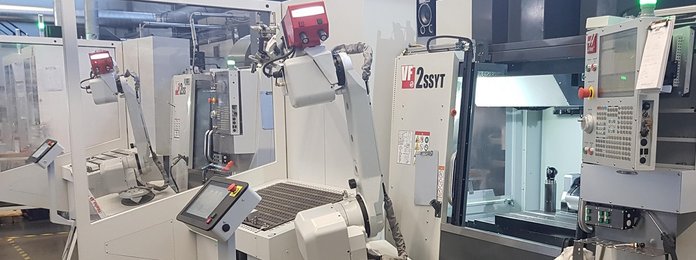
For an increasing number of machine shops, automation is no longer just a plan for the future, but a necessary step. Customers expect shorter lead times, pressure on bottom lines and margins is mounting, and experienced CNC operators are hard to find. With an automation solution, you can increase production, keep machines running longer, and deploy employees where their expertise is most valuable.
But where do you start? Which machines and workpieces are suitable? And how do you ensure that the investment actually pays off? In this article, we explain step by step how to prepare your production for CNC Automation.
Why CNC Automation?
A CNC machine is an investment. Yet in many production environments, it sits idle for much of the time, for example during breaks, between shifts, or at night. Often, the problem isn’t the machine’s capacity, but the availability of employees to load and unload workpieces.
Robotic Automation helps you get more spindle hours. This allows you to:
- Increase production with your existing machinery
- Continue operations in the evenings, at night, and/or on weekends
- Reduce repetitive tasks for operators
- Shorten delivery times
- Ensure more consistent production
- Easier to adapt to staff shortages
- Relieve operators of physically demanding work
1. Map out your current production process
Successful automation doesn’t start with the robot, but with your process. So first, analyze how you’re manufacturing today.
Ask yourself the following questions, among others:
- Which machines experience the most downtime?
- Where do wait times of bottlenecks occur?
- Which tasks are repetitive?
- Which parts are used regularly?
- At what times does the machine come to a standstill due to a lack of staff?
Also consider the material feed, quality controls, clamping devices, and the removal of finished parts, as these factors determine whether a process is suitable for automation.
2. Choose the right machine to automate
It is usually not necessary to automate the entire machine fleet right away. Start with an application that is straightforward and can deliver quick results.
A good first candidate is often a CNC machine that:
- Is reliable and technically stable
- Has sufficient production volume
- Regularly processes similar workpieces
- Has a predictable production process
- Could often produce outside of staffed hours
- Currently requires a significant amount of manual loading and unloading time
Both CNC lathes and milling machines can be automated. The best choice depends on the variations in workpieces, batch sizes, cycle times and available space.
A stable process is essential here. A robot repeats exactly what you instruct to do, but it does not solve fundamental problems in machine clamping of tool management. Therefore, first ensure that the process runs reliably without automation.
3. Select suitable workpieces
A common misconception is that automation is only worthwhile for large production runs. That notion has long since been debunked. After all, modern, user-friendly robotic solutions can also be cost-effective for smaller production runs or even single units.
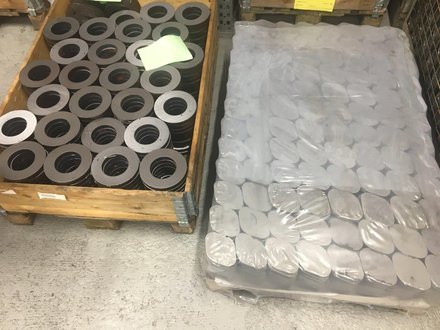
Suitable workpieces have the following characteristics:
- They can be gripped safely and reliably.
- They fall within the robot's capacity.
- They can be positioned consistently.
- The machining cycle is stable.
Start with a relatively simple product. Once operators are familiar with the automation, you can add more complex parts, smaller batches, and greater variety.
4. Involve your operators from the start
Automation isn’t just a technical project. It’s also a change in the way people work. That’s why it’s important to involve operators, programmers, and production managers early on in the process.
They have hands-on experience and know where things can go wrong. Their input helps to:
- Select suitable workpieces
- Identify risks more quickly
- Improve work methods
Also, clearly explain why you’re automating. The goal is to help them make better use of their time and make their jobs more appealing. Operators can manage multiple machines and focus on more creative tasks. Ease of use plays a major role in this.
5. Prepare the work area
Automation must fit logically into your existing production environment. Keep the following in mind:
- Available floor space
- Access to the CNC machine
- Workpiece loading and unloading
- Safety zones
A compact solution can be important when space is limited. At the same time, the machine must remain accessible for daily operations.
Are you ready for Automation?
An experienced automation partner can work with you to determine which CNC machine and workpieces are most suitable. At RoboJob, we develop user-friendly automation solutions for CNC lathes and milling machines. Our systems are designed to be easy to operate and quick to set up, so that both large and small production runs can be automated.
The most important first step? Select a process that is already stable today and determine how many additional spindle hours you want to achieve. From there, you can systematically build a flexible, efficient, and future-proof production system.